Local Service Available — Get a Quote
Gray & Jones County, Georgia

Well Drilling in Gray, GA
Gray Well Drilling
Serves All of Jones County.

When a pump fails or a new property needs water, you need a solution that protects your home — not a sales pitch. Residential wells here typically reach 80–200 feet through middle Georgia's red clay. We handle the full picture — new installations, pump failures, water quality concerns — with no hidden fees.

When Your Well Goes Quiet, Every Hour Counts

Lost water? Low pressure? A new build without a well? We handle every part of your home's water system — from the first bore through decades of maintenance.

No water, low pressure, a new build needing a well, or water quality you don't trust — local homeowners connect with us for every point on that spectrum. Here's what's covered.

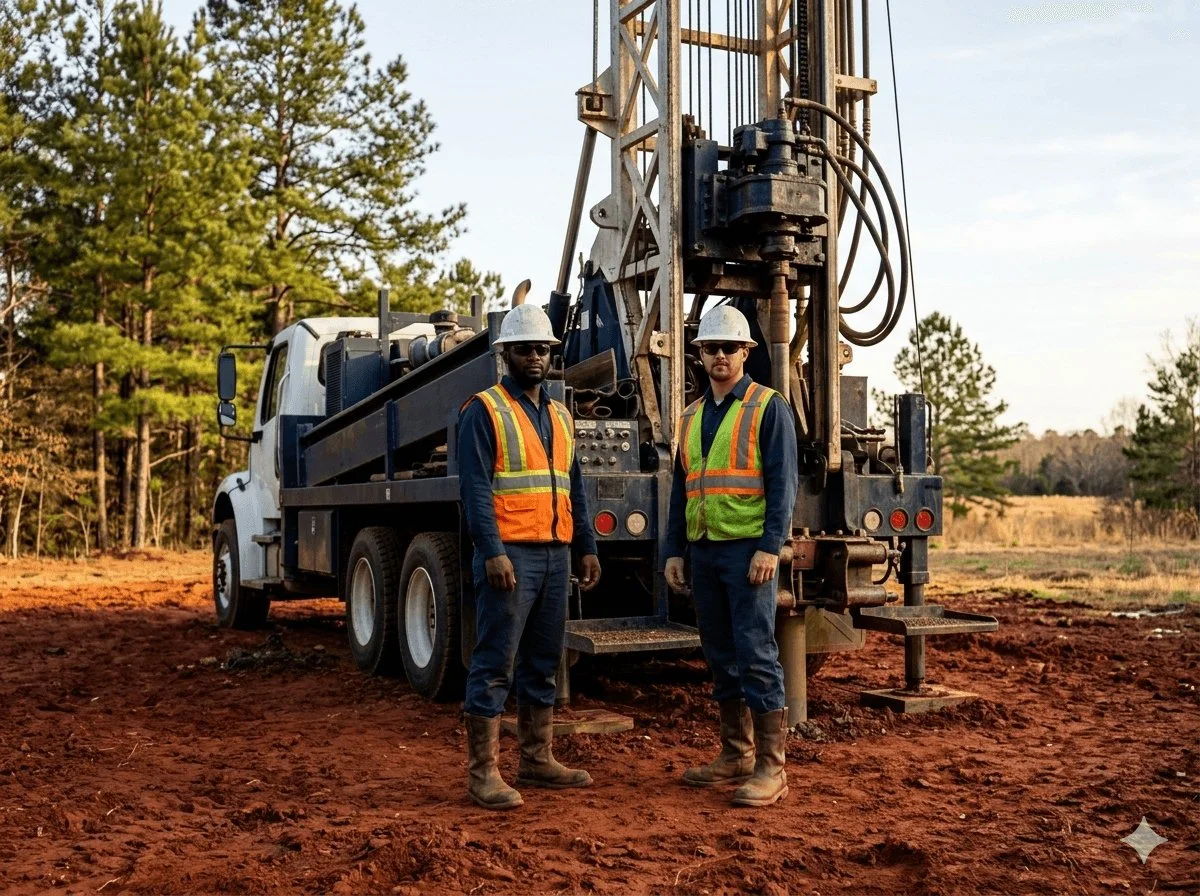
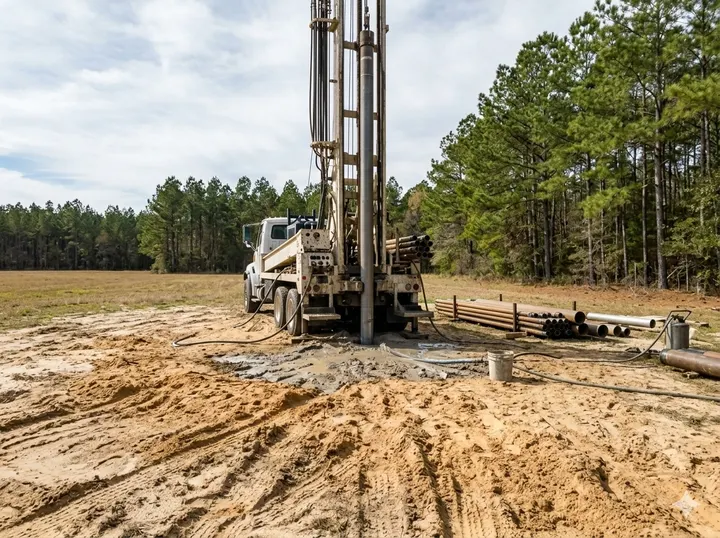
Water well drilling rig operating on a rural Jones County, GA property

New Well Drilling

Complete residential water well installation for properties in this part of Georgia. Our team drills through middle Georgia's red clay profile and reaches the Floridan aquifer at depths of 80–200 feet. Includes Georgia EPD permit coordination, casing, grout seal, and pump installation.

Explore new well drilling
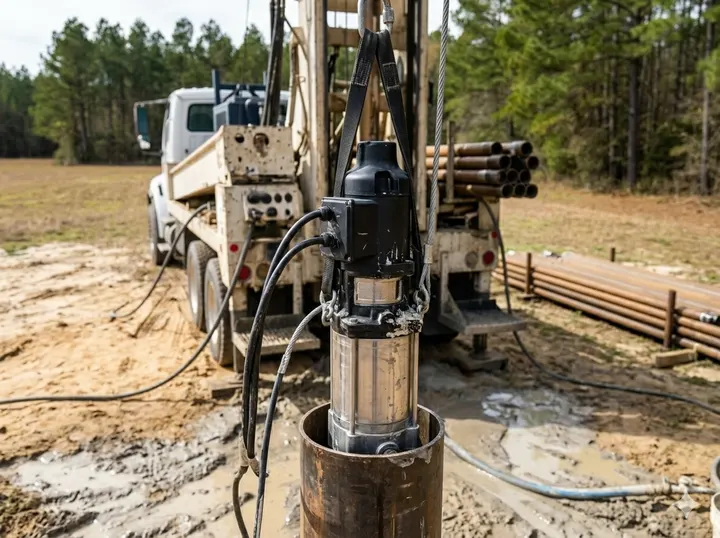
Well pump repair technician working on a submersible pump system

Well Pump Repair & Replacement

Diagnosis and repair of submersible pump systems serving local homeowners. Our field technicians routinely service pumps set at 80–200 feet in this area. Georgia heat and drought cycles accelerate pump wear — we identify failed motors, worn impellers, and pressure switch faults fast.

See pump repair options
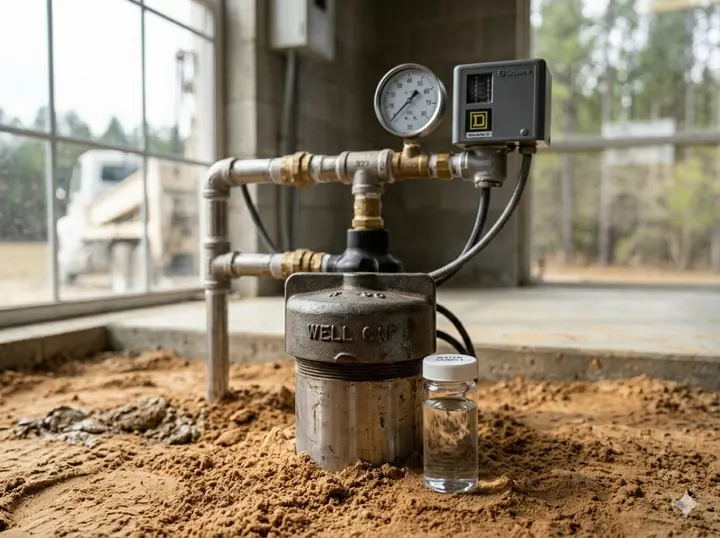
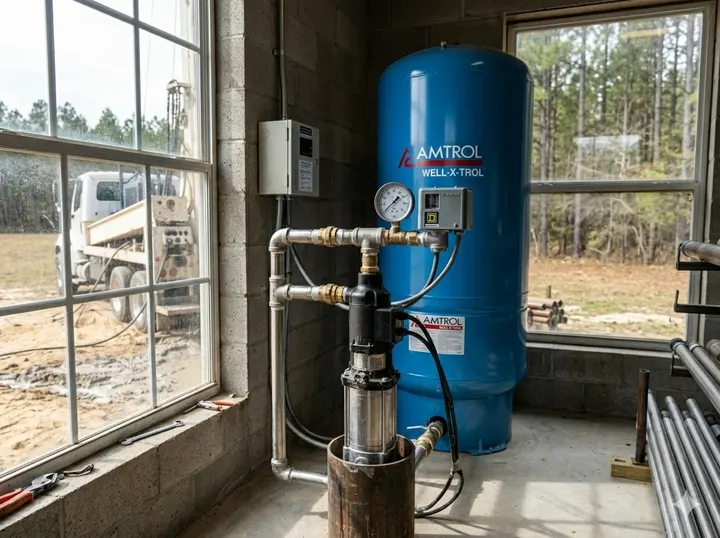
Pressure tank and well pump system for a Georgia residential property

Pressure Tank Service

Waterlogged pressure tanks cause rapid pump cycling, higher energy bills, and early pump failure. Most area systems run on 30/50 PSI settings, and we restore proper pre-charge pressure and replace failing tanks. We also diagnose pressure switch issues that create inconsistent water pressure in your home.

Pressure tank service details
Well inspection and yield testing on a rural Jones County property

Well Inspection

Pre-purchase well inspections, yield testing, and casing integrity evaluation for area real estate transactions and annual maintenance. A typical on-site inspection takes 1–2 hours and covers flow rate, pump performance, and visible wellhead issues. It's one of the best investments you can make before buying a rural property.

Schedule a well inspection
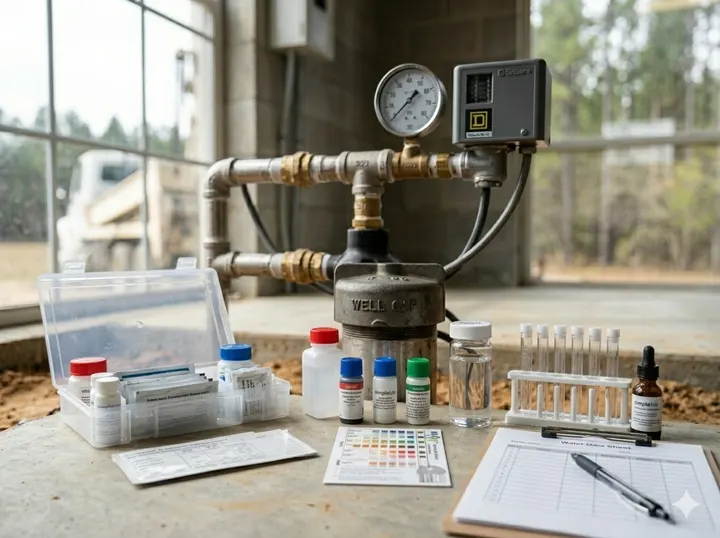
Water testing equipment for private well water quality analysis in Jones County

Water Testing

Comprehensive private well water testing throughout the area — bacteria, coliform, nitrates, pH, hardness, and iron. Georgia recommends annual testing for all private well owners. We test your water and provide clear, readable results with specific treatment recommendations if anything is outside safe limits.

Water testing info
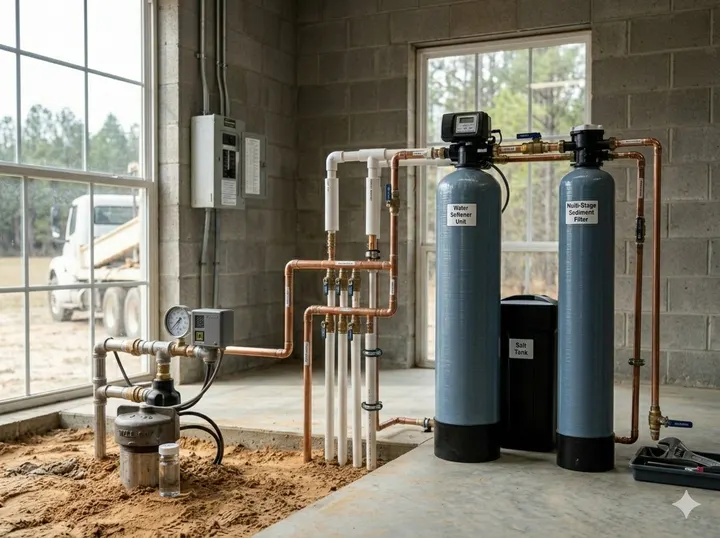
Water treatment and iron filtration system for a Georgia well water property

Water Treatment

Iron filtration, water softeners, UV disinfection, and whole-house filtration systems for area properties. Iron staining and hard water are common in middle Georgia wells, and the right treatment system protects pipes, appliances, and water quality long-term without ongoing chemical costs.

Water treatment solutions

Why Local Homeowners Choose Us

Local to Jones County

We know middle Georgia soil — the dense red clay layers, the depth to the Floridan aquifer, and the conditions that affect every job. No out-of-area crews guessing at local geology.

Emergency Service Available

A failed pump is an emergency. When your water stops, we respond fast. Submit a request describing your symptoms and we'll get back to you quickly.

EPD Permit Handling

Georgia EPD requires a permit before any new well is drilled. We coordinate permit applications for every new installation — you don't navigate state paperwork to get water on your property.

Full Water System Service

From new well drilling to testing, treating, and maintaining what you already have — we handle every part of your private water system. One crew for everything your property needs.

Drilling rig on a Jones County, GA job site

Well Drilling in Middle Georgia Takes Local Knowledge

This region sits in the heart of middle Georgia, east of Macon, where rural residential properties rely heavily on private wells and septic systems. The area's dense red clay soil profile creates specific challenges — clay expands, shifts, and can collapse around the bore if equipment and technique aren't matched to local conditions.

Residential wells here typically reach 80 to 200 feet to access the Floridan aquifer system, though the exact productive zone varies significantly from property to property. Conditions on one parcel in Round Oak may not apply to the next parcel in Haddock.

1

Dense red clay in the upper soil profile requires proper steel casing and grout seal to protect groundwater quality and prevent surface contamination.

2

Georgia's periodic drought cycles increase demand on private wells — maintaining pump and pressure systems before a drought hits protects your water supply when municipal restrictions don't apply to you.

3

Rural properties in this area often have older wells with steel casings susceptible to corrosion — regular inspection identifies problems before they contaminate the water supply or cause catastrophic failure.

Signs Your Well Needs Attention

  • Low or no water pressure — Sudden pressure drop often signals pump failure, a waterlogged pressure tank, or a leak in the drop pipe inside the casing.

  • Rust, discoloration, or metallic taste — Iron is common in middle Georgia groundwater. Orange-tinged water or a metallic taste indicates iron levels high enough to require treatment.

  • Pump running constantly — A pump that cycles on and off rapidly, or runs without shutting off, usually indicates a failed pressure tank or a pump that can no longer maintain system pressure.

  • Spitting air from faucets — Air in the water lines is often the first sign that a well is running low on yield or that the pump is drawing air because the water level has dropped below the intake.

  • Water that smells like sulfur or rotten eggs — Hydrogen sulfide in well water is common in certain local formations. It's treatable with the right filtration system once the source is identified through testing.

How the Well Drilling Process Works

From your first inquiry to running water — here's what to expect

Site Assessment & Quote

We evaluate your property location, review local well logs for nearby properties, and provide a detailed written quote covering depth estimate, casing, pump, and total installed cost.

Georgia EPD Permit

We file the Georgia Environmental Protection Division well permit on your behalf before any drilling begins. Permit approval typically takes a few business days and is required by state law for all new wells.

Drilling & Casing

Most residential wells are completed in one to two days. We drill to the target depth, set the steel casing, and apply the grout seal required to protect the aquifer and your well from surface contamination.

Pump, Pressure & Testing

After drilling, we install the submersible pump and pressure system sized for your household or property. We test yield, flow rate, and water quality before we leave — you know exactly what you have before we hand over the keys.

Serving All of Jones County, GA

Gray Well Drilling serves residential and rural properties throughout Jones County with complete well and water system services — including Gray, Haddock, Round Oak, Cleveland, and Devereux. If your property is in the county, we come to you.

Many rural properties sit east of Macon with no access to municipal water — private wells are the only reliable water source. As a local company, we know the county's roads, property types, and groundwater conditions that vary between highway corridors and deep rural areas.

Well Drilling Questions — Jones County

Common questions about well drilling, pump repair, and water quality in middle Georgia

How deep does a well need to be in Jones County, GA?

Residential water wells in this area typically reach 80 to 200 feet to access reliable groundwater from the Floridan aquifer system. The exact depth depends on local geology, the property's elevation, and where a productive water-bearing zone is encountered. Middle Georgia's dense red clay layers vary significantly from parcel to parcel, which is why a site assessment before drilling matters. Some properties with thicker clay overburden may require drilling beyond 200 feet.

How long does it take to drill a well?

Most residential well drilling projects are completed in one to two days once drilling begins. The process includes site preparation, drilling to the target depth, setting the casing and grout seal, and pump installation. Georgia EPD permitting happens before drilling starts and typically takes a few business days to process. From permit application to running water, plan for one to two weeks total.

Do I need a permit to drill a well in Georgia?

Yes — the Georgia Environmental Protection Division (EPD) requires a permit before any new water well can be drilled anywhere in the state. The permit ensures the well is sited, constructed, and sealed to protect both the aquifer and neighboring properties. Gray Well Drilling handles all EPD permit coordination as part of the new well installation process. You do not need to navigate state paperwork on your own.

What causes a well to stop working?

The most common causes of submersible pump failure are motor burnout from age or electrical surge, worn impellers that reduce water flow, a failed pressure switch, and a waterlogged pressure tank that causes the pump to cycle too frequently. Georgia's summer heat and periodic drought conditions put additional load on pump systems. If you have no water or sudden low pressure, the issue is usually diagnosable within a single service call.

How often should well water be tested?

The state recommends that private well owners test their water at least once per year for bacteria and coliform, and every three to five years for a broader panel including nitrates, pH, hardness, and iron levels. Properties near agricultural land or with older casings should test annually without exception. Testing is especially important after any nearby construction, flooding, or a pump service event that may have disturbed the wellbore.

What is in well water in Jones County?

Well water quality varies by depth and local geology. Iron is a common issue throughout middle Georgia, causing orange staining and a metallic taste. Hard water from calcium and magnesium is also typical at shallower depths. Bacterial contamination is possible in older or improperly sealed wells, particularly following heavy rainfall. A basic water test will tell you exactly what is present and whether treatment is needed.

Can a well be repaired, or replaced?

Many well problems — failed pumps, worn pressure tanks, corroded fittings, or a bad pressure switch — can be repaired without touching the wellbore itself. Well replacement is generally needed only when the casing has collapsed, the well has gone dry due to a permanently lowered water table, or the water quality cannot be treated. A service call and inspection will determine which situation you're dealing with.

How does well drilling work?

Residential well drilling uses a rotary drilling rig to bore through soil and rock layers until it reaches a productive water-bearing zone. The bore is lined with steel casing, and a grout seal is installed around the top to prevent surface water contamination. Once the bore is complete, a submersible pump is lowered in, connected to a pressure tank at the wellhead, and tested for flow rate. The process — from site prep to running water — typically takes one to two days of active drilling.

Can you drill a well anywhere on a property?

Not quite — Georgia EPD setback rules require minimum distances between a new well and septic systems, property lines, drainage features, and buildings. The minimum setback from a conventional septic drain field is 50 feet; other setbacks vary by feature type. A site assessment confirms the best location that meets EPD requirements and reaches the most productive zone. Most rural properties have suitable locations, but the assessment step is not optional under Georgia law.

Is it legal to drill your own well in Georgia?

Georgia law requires that any new water well be drilled by a licensed well driller registered with the Georgia Environmental Protection Division. Homeowners are not permitted to drill their own wells, and unpermitted wells are illegal under Georgia's Water Well Standards Act. Using a licensed driller ensures the well is properly cased, sealed, and documented with the state.

How long does a well pump last?

A quality submersible pump installed at the correct depth for the aquifer typically lasts 10 to 15 years with normal residential use. Pumps that run constantly due to a waterlogged pressure tank will fail earlier — sometimes within five to seven years. Georgia's summer heat and seasonal drought conditions can also shorten pump life by increasing run cycles. Annual system checks that include pressure tank pre-charge testing are the single best way to extend pump life.

When should a well pump be replaced?

A well pump should be replaced when it fails completely, when repair costs exceed 50–60% of a new pump's installed cost, or when the pump is more than 12–15 years old and beginning to show reduced output. Short cycling, air spurting from taps, and sudden loss of water pressure are all signs of pump or pressure tank failure. Replacing an aging pump proactively — before it fails in summer heat — avoids the emergency cost premium.

How do I test my well water?

Well water testing begins with collecting a sample from a tap close to the pressure tank — typically a laundry room or utility sink — using a sterile bottle provided by the testing lab. The sample must be collected under specific conditions to avoid contamination that would produce a false bacteria result. Gray Well Drilling can perform on-site sampling and submit to a certified Georgia laboratory. Standard panels test for coliform bacteria, nitrates, pH, hardness, iron, and other common concerns.

Why is my well water discolored?

Orange or rust-colored well water is almost always caused by elevated iron levels — a common condition throughout middle Georgia's aquifer system. Black or dark discoloration can indicate manganese. Cloudy or milky water often indicates sediment disturbance or a well that needs flushing. A basic water test identifies the cause, and iron filtration or a whole-house sediment filter typically resolves the problem.

Why does my well water smell?

A sulfur or rotten-egg smell in well water is typically caused by hydrogen sulfide gas, which occurs naturally in some aquifer zones throughout middle Georgia. An earthy or musty smell can indicate bacterial activity in the wellbore or a system that hasn't been flushed recently. A water test confirms the specific compound causing the odor. UV disinfection, shock chlorination, and carbon filtration are common treatment options depending on results.

Who fixes water wells near me?

Well pump repair should be performed by a licensed well contractor or pump service technician with experience in submersible pump systems. General plumbers and HVAC technicians typically do not work on well pumps — the diagnostics require specialized tools for measuring pump amperage, checking pressure switch calibration, and testing pressure tank pre-charge. Gray Well Drilling handles pump diagnosis, motor replacement, pressure switch repair, and full system service throughout the area.

How long do water wells last?

A properly constructed and maintained water well can last 20 to 40 years or more. The steel casing, when correctly installed with a grout seal, resists corrosion from middle Georgia's red clay soils for decades. The pump and pressure tank will need replacement well before the casing fails — typically every 10 to 15 years for the pump. Annual water testing and periodic inspection of the wellhead and pressure system are the keys to maximizing well life.

Do well drilling companies offer financing?

Some well drilling contractors offer payment plans or work with third-party financing services for larger projects like new well installation. A complete residential well installation — drilling, casing, pump, and pressure system — typically runs $5,000 to $12,000, which is a significant out-of-pocket expense for rural property owners. Submit a quote request describing your project and location, and we can discuss payment options when we follow up with your estimate.

Do you drill irrigation wells?

Gray Well Drilling provides irrigation well drilling for rural properties, small farms, and large residential lots that need a dedicated water supply for lawn irrigation, livestock, or small-scale agriculture. Irrigation wells are typically shallower than domestic supply wells when the Floridan aquifer can be reached at 80 to 150 feet. Georgia EPD permitting requirements apply to all well types regardless of intended use.

What aquifer do wells tap in Georgia?

Residential water wells primarily tap the Upper Floridan aquifer — a regionally extensive limestone aquifer system that underlies much of middle and south Georgia. In the Piedmont region, it's accessed through fractured crystalline bedrock rather than open karst passages found further south. Water-bearing fractures typically begin at 80 to 140 feet below grade. The Floridan aquifer system is the most important freshwater aquifer in Georgia, providing drinking water to millions across the southeastern United States.

How deep is the water table in middle Georgia?

The water table depth varies considerably by location, season, and subsurface geology. Shallow water-bearing zones may be encountered as little as 30 to 50 feet below grade, but these are often insufficient for a reliable residential supply. Most productive wells reach the fractured bedrock aquifer at 80 to 200 feet. During extended drought — common in Georgia summers — shallow levels can drop, making depth selection at the time of drilling especially important for long-term reliability.

How deep are wells in this area?

Wells typically range from 80 to 200 feet in depth, with the majority of residential completions falling between 100 and 160 feet. The variation depends on where productive water-bearing fractures are encountered in the bedrock, the thickness of the overlying red clay and saprolite, and the elevation of the specific property. Properties at higher elevations or with thicker clay cover may require deeper drilling. A site assessment before drilling gives the best estimate for your specific parcel.

What happens after a well is drilled?

Once drilling reaches a productive water-bearing zone and the bore is complete, the well is cased with steel pipe and sealed with a grout barrier to prevent surface water contamination. A submersible pump is then lowered in and connected to a pressure tank at the surface. The system is tested for flow rate, pressure consistency, and water clarity before being put into service. A water quality test is recommended within the first week, and the Georgia EPD permit is closed out once construction is documented.

Why is well drilling so expensive?

Well drilling costs reflect the heavy equipment required to bore through middle Georgia's dense red clay and fractured bedrock, the cost of steel casing and grout materials, the submersible pump and pressure tank system, and the Georgia EPD permitting process. Deeper wells require more casing, more drilling time, and higher-capacity pumps — all of which increase cost. A complete residential well installation typically ranges from $5,000 to $12,000, covering everything from permit to running water.

How do I know if my pump is going bad?

The most common signs of a failing well pump include frequent pressure cycling (pump turns on and off rapidly), sputtering or air bursts from faucets, noticeably reduced water pressure, unusually high electric bills, and sediment or discolored water that wasn't present before. A pump drawing higher-than-normal amperage is another indicator that requires a service technician with a clamp meter to confirm. A service call can determine whether the issue is the pump, the pressure tank, or the pressure switch.

Is my well water safe to drink?

Private well water is not regulated by municipal water treatment standards — the property owner is responsible for water quality. The only way to know whether your well water is safe to drink is to have it tested by a certified laboratory. Georgia recommends annual testing for coliform bacteria and nitrates at minimum. Common issues in middle Georgia wells include elevated iron, hard water, and occasional bacterial contamination, all of which are treatable once identified.

What contaminants should I test for?

The recommended well water testing panel includes total coliform bacteria, E. coli, nitrates, pH, iron, manganese, hardness, and total dissolved solids. Properties near agricultural land should also test for pesticide residues and elevated nitrate levels. Older wells or wells with corroded casings may warrant testing for lead. Georgia's Department of Natural Resources recommends annual bacteria testing and a broader panel every three to five years for all private well owners.

What do I do if my well stops working?

If your well suddenly stops producing water, first check the circuit breaker that powers the pump — a tripped breaker is the most common and easiest cause to rule out. If the breaker is on and you still have no water, the issue is likely a failed pump motor, a waterlogged pressure tank, or a failed pressure switch. Do not repeatedly reset a tripping breaker, as this can indicate a short circuit. Contact a licensed well service technician for diagnosis — most single-visit service calls can identify and often resolve the problem the same day.

Why do I suddenly have no water?

A sudden loss of water is most commonly caused by a tripped breaker, a burned-out submersible pump motor, a failed pressure switch, or a waterlogged pressure tank causing the pump to short-cycle to failure. Less commonly, extended drought can temporarily lower the water table below the pump intake depth. A service technician can diagnose the cause with electrical testing at the wellhead and a pressure tank pre-charge check — typically under an hour.

How do I know if my pump burned out?

A burned-out well pump typically presents as a complete loss of water with the breaker still on, or a breaker that trips immediately when reset. A service technician confirms failure by measuring the motor's amp draw and insulation resistance at the wellhead using a clamp meter and megohmmeter. If the motor shows zero resistance or draws no current, the pump has failed and needs to be pulled and replaced. The diagnostic process itself does not require pulling the pump.

Can a well run dry?

Wells can experience reduced yield or temporary loss during extended drought, but a properly drilled well that reaches a productive zone in the fractured bedrock aquifer rarely goes permanently dry. Shallow wells and marginal zones are more vulnerable to seasonal fluctuations. If a well consistently loses water during dry periods, deepening or drilling a new well to a more productive zone is usually the long-term solution.

What causes a well to lose pressure?

The most common causes of low well water pressure are a waterlogged pressure tank, a failing pressure switch, a worn pump that can no longer maintain adequate flow, a partially closed or clogged valve, or iron buildup restricting flow through pipes and fixtures. A waterlogged pressure tank is the single most frequent cause — when the internal bladder fails, the tank can't maintain air pressure and the pump cycles rapidly. A service call with a pressure tank pre-charge test and pump amp draw measurement will identify the root cause.

Free quotes No obligation Fast response

Get a Free Quote

Describe your project or issue and we'll get back to you with a straightforward estimate. Serving all of Jones County.

Tell us what you need — we'll follow up with pricing and availability.

Find Us in Jones County

Service Coverage & Availability

Primary Service Area Gray, Haddock, Round Oak, Cleveland, Devereux — all of Jones County, GA
Availability Emergency service available — submit a quote request for fast response
Quote Response Written estimates returned within 24 hours of inquiry
EPD Permit Filing Handled for all new well projects — no state paperwork for you to navigate
Water Testing On-Site Field testing with lab referrals available throughout Jones County