Iron Staining or Hard Water? We Treat Well Water Throughout Jones County — Get a Quote
Jones County, Georgia

Well Water Treatment —
Gray & Jones County, GA

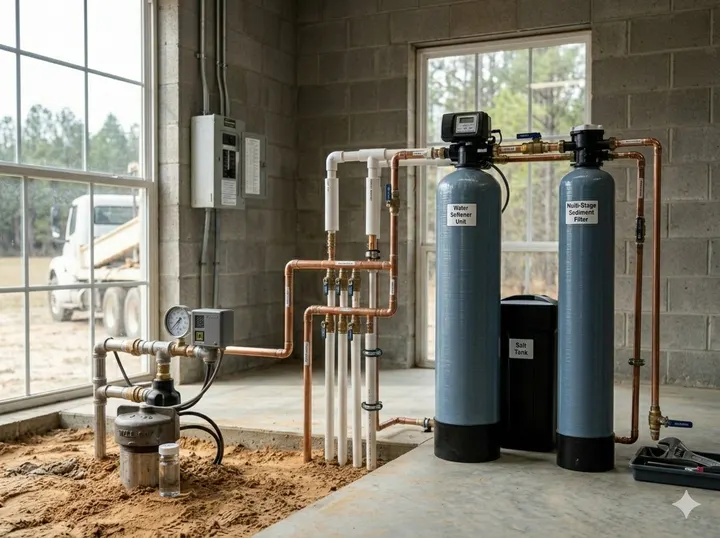
Gray and Jones County homeowners rely on well water treatment to solve iron staining, hard water treatment needs, and well water taste problems common across middle Georgia. The right well water treatment system protects your pipes, appliances, and water quality for the long term — without ongoing chemical costs or guesswork. Every Jones County water treatment solution we install is matched to your specific water test results.

Well Water Treatment Systems We Install

We match the system to what your water test shows — no one-size-fits-all equipment

Iron Filtration

Orange or brown staining on sinks, tubs, and toilets is the most common complaint we hear from Jones County well owners dealing with iron in well water. Iron is naturally abundant in the geological formations that supply the Floridan aquifer across middle Georgia, and even relatively low concentrations cause visible staining and taste problems that only a proper iron filtration system and well water filtration can resolve. An iron filtration system is typically the first stage of any comprehensive well water treatment plan in Gray, GA.

  • Oxidizing media filters capture ferrous iron before it reaches your fixtures — no staining, no metallic odor
  • Air injection systems (air pockets) oxidize iron in a contact tank, then filter the precipitated particles — effective for higher iron concentrations above 3 ppm
  • System selection is based on your water test results — iron concentration, pH, and manganese levels all affect the right approach
  • Protects all downstream appliances, fixtures, and water heaters from iron fouling and corrosion

Water Softeners

Hard water from well sources — water with elevated calcium and magnesium — is a widespread issue in Jones County wells requiring hard water treatment. Hard water leaves scale buildup inside pipes, hot water heaters, and appliances, reducing efficiency and shortening equipment life. Water softener installation is a proven whole house water treatment solution that replaces calcium and magnesium ions with sodium, delivering complete hard water treatment throughout your entire home.

  • Eliminates white scale deposits on faucets, showerheads, and in appliances
  • Soap lathers fully, skin and hair feel cleaner, dishwasher spots disappear
  • Extends the life of water heaters, washing machines, and dishwashers by preventing internal scaling
  • Sized to your household water demand — single-bathroom cabin to large family home

UV Disinfection

UV water disinfection systems are the cleanest, most effective well water treatment method for bacterial contamination in Gray, GA. UV light destroys bacteria, viruses, and other microorganisms at the DNA level without introducing any chemicals into your water supply. After a positive coliform or E. coli test, UV water disinfection is typically the recommended component of any Jones County well water treatment system addressing bacteria in well water.

  • Kills 99.99% of bacteria and viruses without chlorine, taste, or chemical byproducts
  • Ideal response after a positive bacteria test on your well — installed in the line before point-of-use
  • Requires sediment pre-filtration and low iron levels for maximum effectiveness
  • Annual UV lamp replacement maintains full disinfection performance

Whole-House Filtration

Many Jones County well owners need more than a single-issue fix. Whole-house water treatment systems combine multiple well water filtration stages into a single installed unit, addressing sediment, iron, hardness, and biological contamination in sequence. We design multi-stage well water filtration for Gray, GA properties based on what your water test actually shows — a complete Jones County water treatment system tailored to your well.

  • Sediment pre-filters remove sand, silt, and particulates that shorten downstream equipment life
  • Activated carbon filters reduce chlorine, hydrogen sulfide (rotten egg odor), and organic compounds
  • Combined iron filter + softener + UV systems address iron, hardness, and bacterial contamination in one installation
  • Gray Well Drilling installs and maintains all systems — no equipment-only sales

Signs You Need Well Water Treatment in Gray

Your well water will often tell you when something is off — here are the warning signs

Orange or Brown Staining on Fixtures

Rust-colored staining on toilet bowls, sinks, tubs, and laundry is the classic sign of iron in well water. The staining worsens over time and is nearly impossible to remove without a proper well water treatment system and iron filtration system addressing the source.

Rotten Egg Smell

A sulfur or rotten egg odor in your water indicates hydrogen sulfide — a gas dissolved in groundwater common in certain areas of middle Georgia. It is typically harmless at low levels but causes unpleasant taste problems that well water treatment with carbon filtration or aeration can eliminate effectively.

Slippery or Filmy Feeling in Water

Hard water leaves a film on skin after showering and makes soap difficult to rinse off. Paradoxically, softened water can feel slippery — which means the softener is working correctly. A slippery sensation without a softener indicates naturally elevated pH or sodium content worth testing.

Metallic Taste

A metallic flavor in drinking water and ice usually traces to dissolved iron or manganese — both common in Jones County well water at various depths. These taste problems appear when iron exceeds 0.3 ppm. A basic water test panel confirms the source and concentration so the right Jones County water treatment system can target the correct contaminant efficiently.

Iron Film on Dishes

Orange or brownish spotting on dishes, glassware, and silverware after the dishwasher runs indicates iron in the water supply reaching appliances — a clear signal that a well water filtration or water treatment system is needed. This also fouls dishwasher interiors and etches glass over time.

Start with a Water Test

The right well water treatment for Gray, GA depends entirely on what is in your water. A water test is the fastest, most cost-effective step before specifying any well water treatment system or water filtration equipment. We recommend testing for:

Basic Panel: bacteria, coliform, pH, iron, hardness (calcium/magnesium), and nitrates — covers bacteria in well water and the most common Jones County well water treatment needs

Extended Panel: adds manganese, sulfur, lead, and sodium for properties near agricultural land, older homes, or with specific odor or taste complaints

Treatment Quote: once we have your test results, we provide a specific equipment recommendation and written price — no guessing, no upselling on problems you don't have

Request a Quote

Water Treatment System Maintenance in Jones County

Your well water treatment system protects water quality long-term — regular maintenance keeps your Jones County water treatment system performing at full capacity

Softener Salt Replenishment

Ion exchange water softeners regenerate using salt (sodium chloride or potassium chloride). Salt levels must be maintained in the brine tank — typically checked monthly and refilled every 2–3 months for an average household. Low salt causes the softener to regenerate incompletely, allowing hardness to pass through. Most Jones County homeowners on a well water treatment plan find a 40 lb bag of pellet salt every 6–8 weeks keeps a standard system running properly.

Check salt monthly — replenish every 6–8 weeks

Filter Media Replacement

Sediment filters, carbon filters, and iron filtration media all have finite service lives. Sediment pre-filters (the cartridge-style units) typically need replacement every 3–6 months depending on turbidity and water use. Oxidizing filter media such as greensand or Katalox-Light lasts several years with periodic backwashing. Carbon media exhausts over time as adsorption sites fill — replacement intervals depend on flow rates and the contaminants being addressed. We track replacement schedules for every well water treatment system we install and offer water treatment maintenance service throughout Jones County.

Sediment cartridges every 3–6 months — media every 3–5 years

UV Lamp Replacement

UV water disinfection systems depend on the lamp maintaining sufficient intensity to destroy pathogens in the water passing through the chamber. UV lamps lose output over time even when still lit — most manufacturers rate lamp life at 9,000–12,000 hours, which works out to approximately one year of continuous operation. Annual lamp replacement is the standard service interval for residential UV systems in any well water treatment plan. We also recommend replacing the quartz sleeve every 2–3 years, as mineral deposits can reduce UV transmission. Our team services UV systems and other well water filtration equipment installed throughout Jones County.

UV lamp annually — quartz sleeve every 2–3 years

Well Water Treatment Questions

Common questions from Jones County well owners about water treatment systems

What causes iron staining in Georgia well water?

Iron staining in Jones County and middle Georgia well water comes from naturally occurring ferrous iron dissolved in groundwater. As water travels through iron-bearing rock and soil formations in the Floridan aquifer system, it picks up iron in solution. When that water is exposed to air — at a faucet, in a toilet tank, or through your pressure system — the dissolved iron oxidizes into rust-colored particles that deposit on fixtures, tubs, laundry, and appliances. Even iron concentrations as low as 0.3 mg/L (0.3 ppm) cause visible staining over time. The good news is iron is one of the most consistently treatable well water problems — the right iron filtration system and well water treatment removes it before it reaches your plumbing.

How do I know if I need a water softener?

The most reliable method is to test your water for hardness — the calcium and magnesium concentration expressed in grains per gallon (gpg) or milligrams per liter (mg/L). Water above 7 gpg is considered hard; above 10 gpg is considered very hard, and scaling damage to appliances accelerates noticeably. Practical signs you may need hard water treatment include: white crusty scale around faucet aerators and showerheads, spots on glassware and dishes after washing even with a dishwasher, soap that doesn't lather well and leaves a film on skin and hair, and repeated water heater element failures or reduced dishwasher performance. If you have noticed these signs in a Jones County well-supplied home, a water test will confirm whether hardness is the cause and guide your water softener installation decision.

Is UV disinfection better than chlorination for well water?

For most residential well owners in Jones County, UV disinfection is the preferred approach after a positive bacteria test. UV light destroys bacteria, viruses, and other pathogens at the DNA level without adding any chemicals to your water — there is no chlorine taste, no chemical residue, no storage of hazardous materials on your property, and no disinfection byproducts. Continuous chlorine injection is effective but introduces ongoing chemical cost, requires maintaining a chemical feed system, and can produce trihalomethanes at higher doses. Shock chlorination temporarily disinfects the wellbore but does not protect water on an ongoing basis. UV systems require annual lamp replacement and must be preceded by sediment and iron removal to function correctly — but installed properly, they provide reliable, chemical-free protection from biological contamination with minimal ongoing maintenance.

How much does a water treatment system cost?

Water treatment cost depends entirely on what your water requires. A single sediment filter housing is the least expensive entry point. Iron filtration systems for middle Georgia wells typically range from $800 to $2,500 installed, depending on iron concentration, flow rate requirements, and the type of media used. Water softener installation runs $1,000 to $2,500 for a standard residential system. UV water disinfection units add $400 to $900 installed when combined with necessary pre-filtration. Whole-house well water treatment systems addressing iron, hardness, and bacteria in well water together run $2,000 to $5,000 or more depending on the specific equipment and your home's water demand. The most cost-effective approach is always to test first — it ensures your water treatment cost covers only what your water actually requires.

Free quotes No obligation Fast response

Get a Free Well Water Treatment Quote

Tell us about your well water quality issues using the quote form on our homepage and we'll recommend the right well water treatment system for your Jones County property — including water treatment cost estimates and well water filtration options.

Request a Free Quote

Free estimate. No obligation. Response within 24 hours.